The Catalyst
Finalist for the New European Bauhaus Trophy Design Competition
The New European Bauhaus (NEB) Prizes are an annual European Commission competition that rewards outstanding projects, start-ups, and concepts embodying sustainability, inclusiveness, and aesthetics/beauty. The Catalyst was selected as a finalist in the competition to design the trophy for the NEB Prizes.
The metaphor
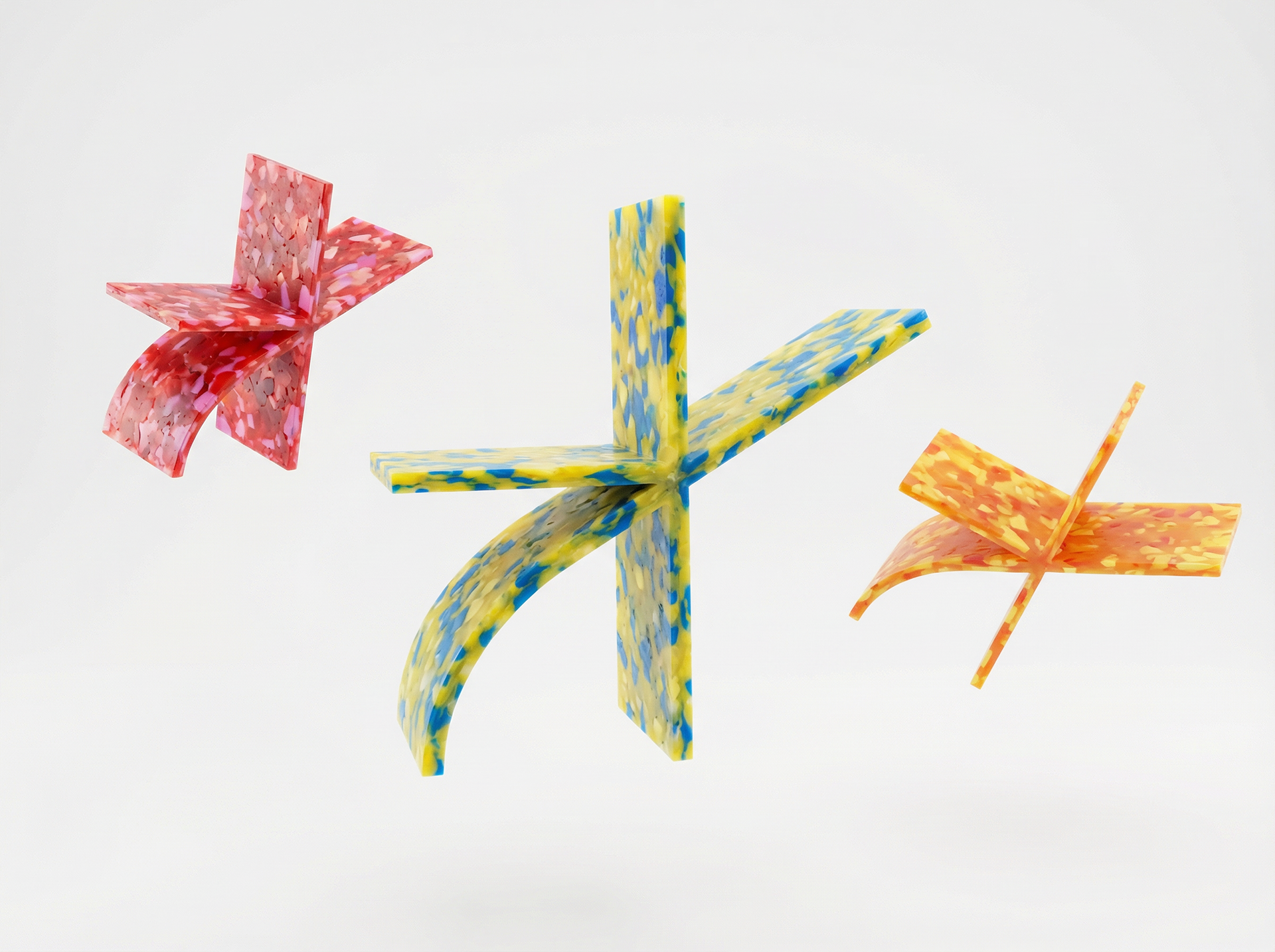
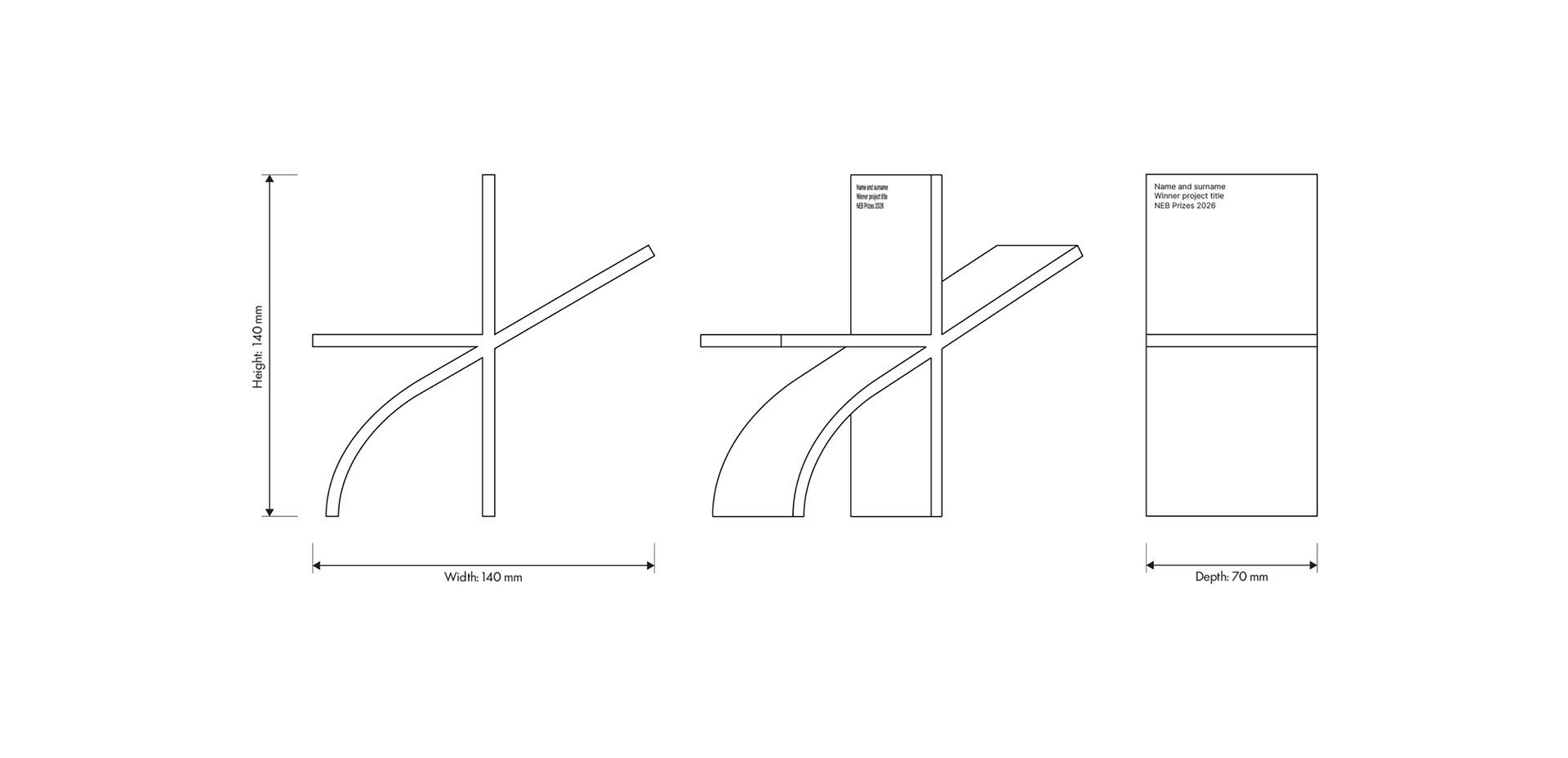
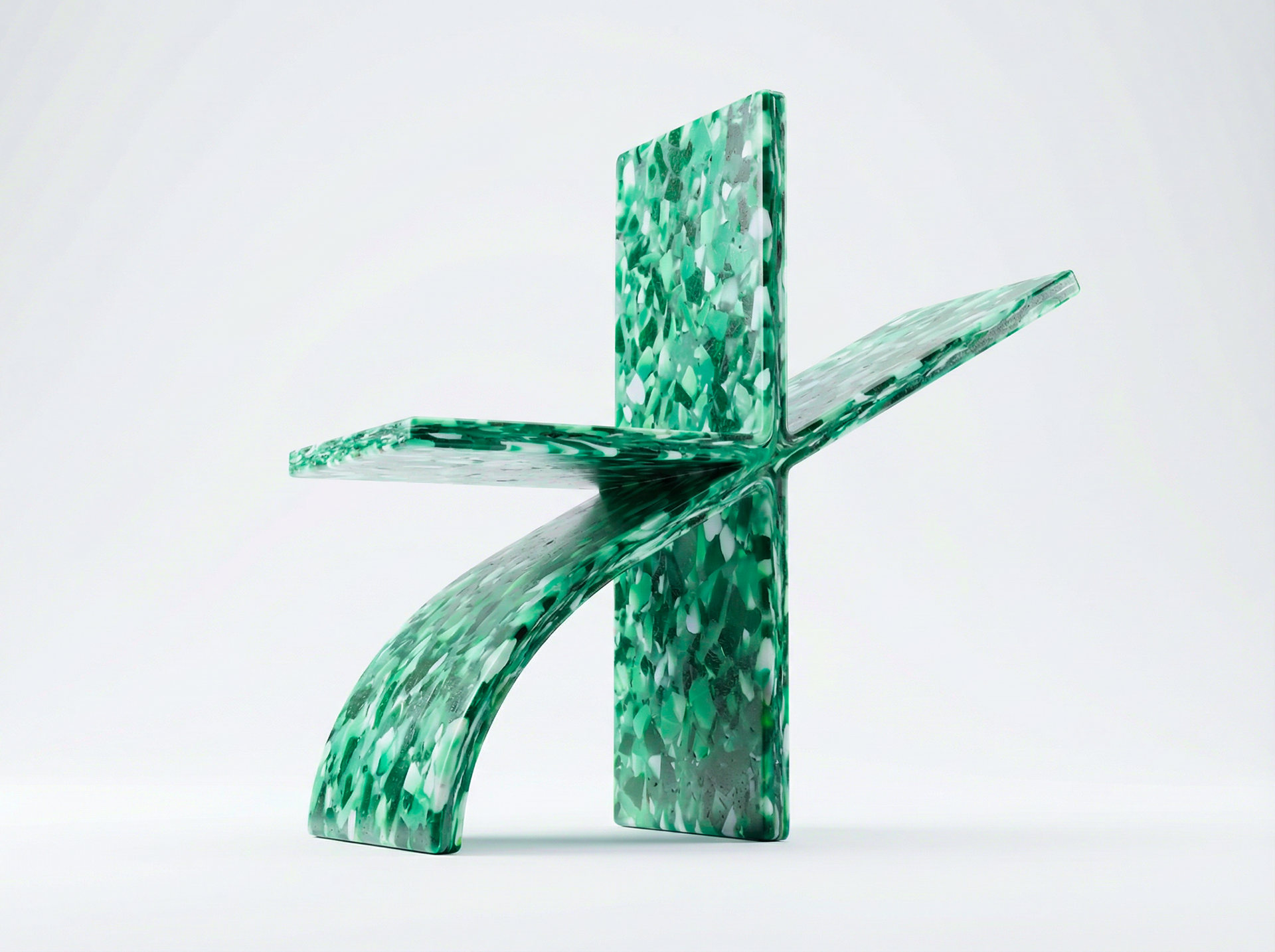
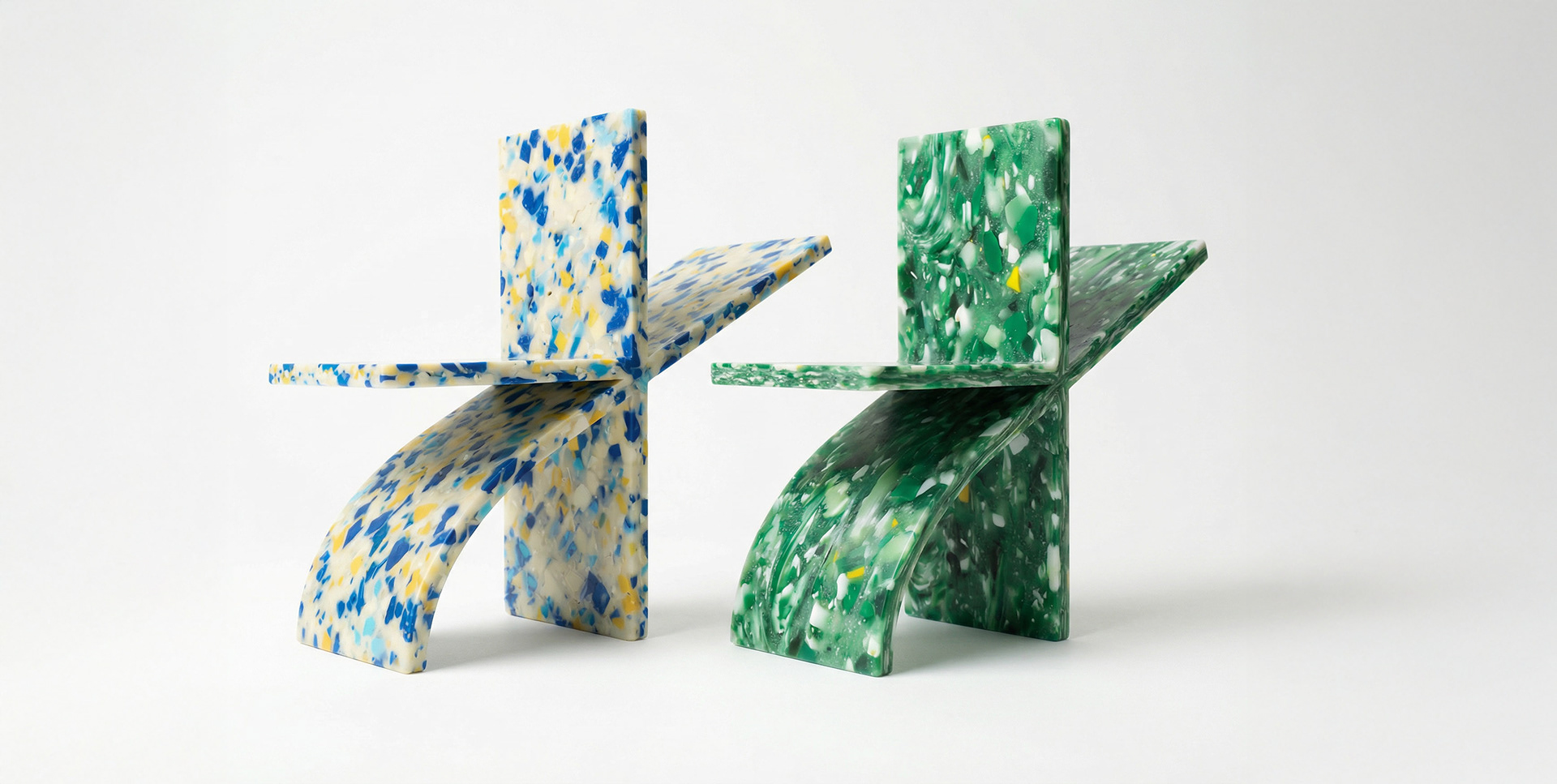
The design starts from the abstraction of an European symbol, the five-pointed star. It is born from the intersection of two perpendicular planes, one curved that stems downwards, and another inclined surface, that goes upwards. These lines converge to form the silhouette of a walking person.
Material
The trophy is a monobloc piece made out of Recycled HDPE (Type 2) for its durability, aesthetic, and symbolic value. The material can be sourced from shredded post-consumer waste. The compression technique results in a smooth but visually rich surface. HDPE is chemically inert and time resistant, the trophy will remain a permanent heirloom for the laureate, or if wished, it can be fully recycled again, as the piece is made out of 100% recyclable materials.
Production process
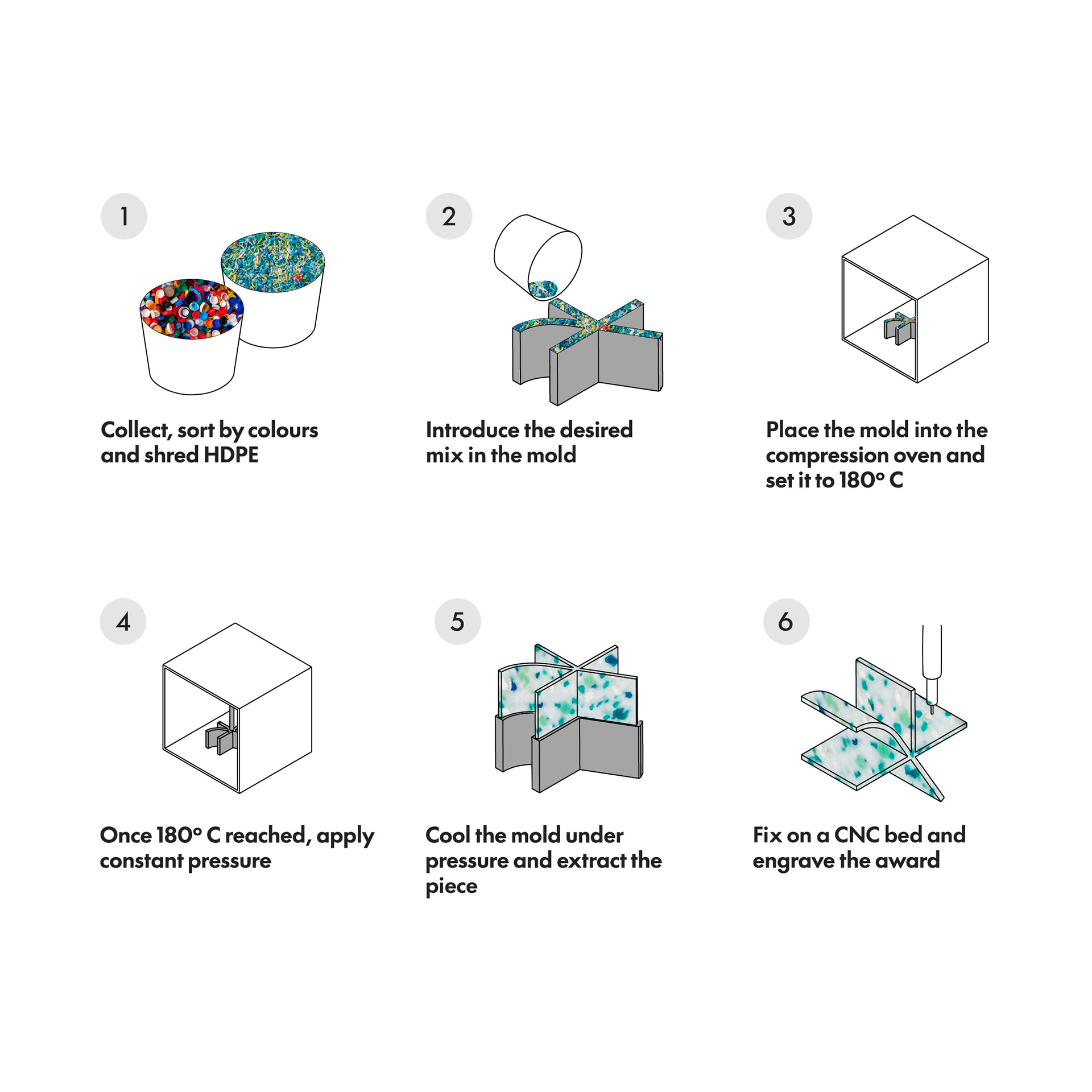
It starts by collecting, sorting by colours, and shredding post consumer plastic waste such as bottle caps or detergent bottles, etc.). The shreds are combined following the desired color palette and poured into the steel mold, ensuring the volume is slightly overfilled to compensate for compression. The mold is placed into an industrial oven at 180°C. This softens the HDPE without fully liquefying it, creating the "terrazzo" texture. As the material reaches the correct temperature, pressure is applied by a hydraulic press to eliminate internal air pockets. The mold cools down under pressure to prevent warping. Once solid, the piece can be extracted and the laureate’s name can be CNC-milled on the side.
Beautiful, sustainable, together
The trophy uses the colors inherent in the collected plastic waste. Since the material is sourced from post-consumer waste, having a flat RAL color is not possible. Instead, the unpredictable combination of various plastic sources is embraced. The compression process creates a vibrant mosaic where the final appearance is the result of how different colors mix and interact in the mold. This lack of absolute industrial control is transformed into a part of the process. Furthermore, this method allows to change the trophy color depending on the category.